TMJ & Jaw Pain Treatment in Calgary SW
Dental care at Westside is provided by Dr. Zubaida Hussain, dentist and Dental Director, in West Springs, Calgary SW. We follow the Alberta Dental Fee Guide and accept the Canadian Dental Care Plan (CDCP). New patients welcome – no referral needed.
Understanding TMJ Dysfunction
The temporomandibular joint (TMJ) is the hinge that connects your jaw to your skull. You have one on each side of your face, just in front of your ears. When this joint and the surrounding muscles are working well, you can speak, chew, and yawn without a second thought.
TMJ dysfunction is more common than most people realize, and its symptoms can extend well beyond the jaw itself.
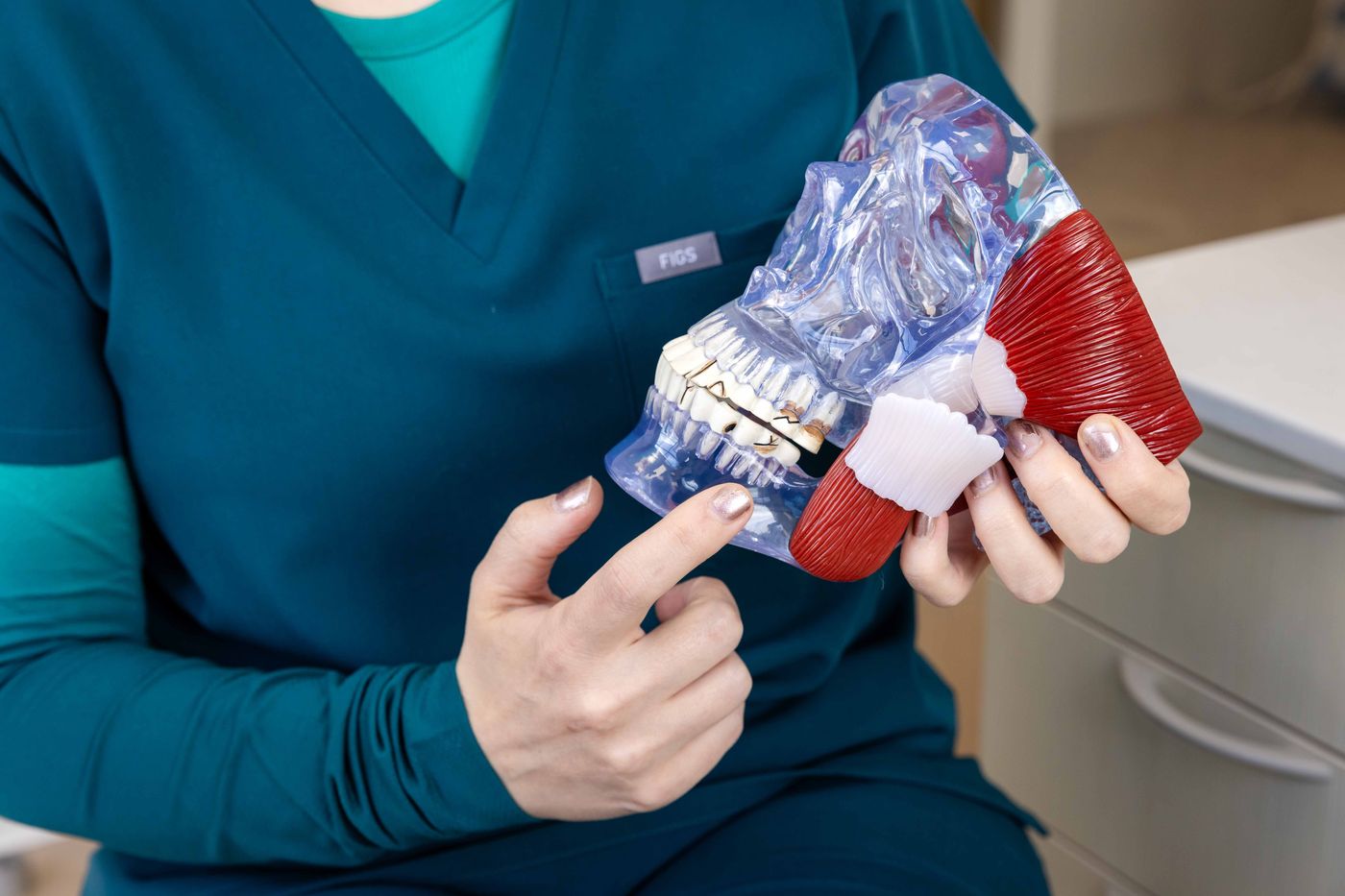
Common symptoms include
- Jaw pain, soreness, or tenderness
- Clicking, popping, or locking of the jaw
- Headaches and migraines, especially in the temples
- Neck and shoulder pain or stiffness
- Ear pain or a feeling of fullness in the ears
- Facial tension or fatigue
- Teeth grinding or clenching (bruxism)
- Difficulty opening the mouth fully
- Pain when chewing or yawning
If you recognize several of these symptoms, a TMJ assessment at Westside is your first step toward real relief.
Comprehensive TMJ Care
Most dental clinics offer one or two options for TMJ – typically a mouth guard and maybe a referral.
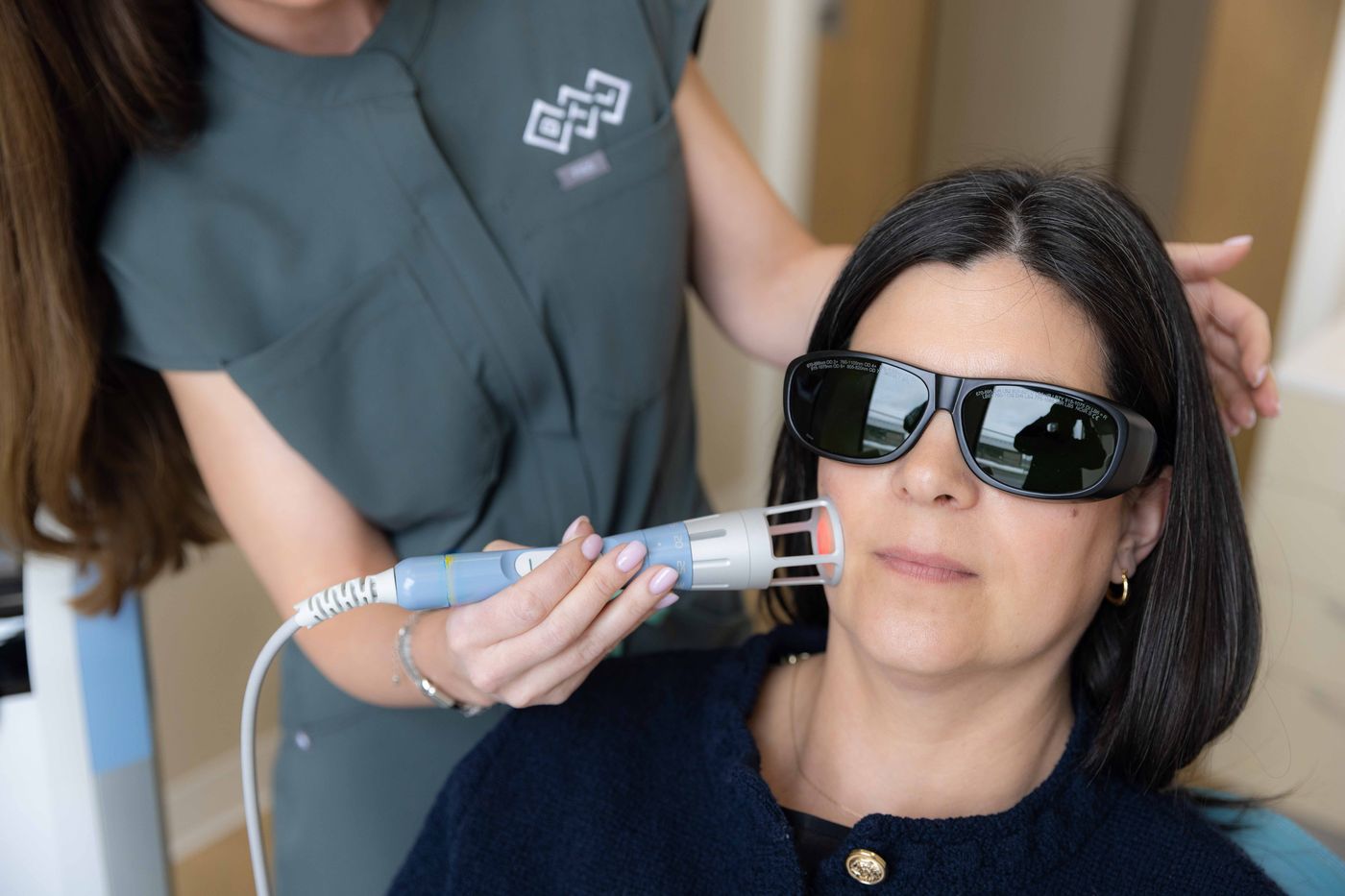
- EMVITAL® — High-intensity laser therapy used to help relieve jaw pain and inflammation – delivered on the medical side of the clinic under Dr. Sabah, our on-site family physician
- EMFACE® — Health Canada-licensed muscle stimulation that directly targets the jaw muscles for TMJ relief – also delivered on the medical side of the clinic under Dr. Sabah
- Therapeutic jaw-muscle injections — Relax the masseter muscle to ease grinding, clenching, and jaw tension
- Custom mouth guards — Protects your teeth and reduces joint strain from nighttime bruxism
- EXOMIND™ TMS for stress-driven clenching and grinding – an adjunct assessed by Dr. Sabah
- No referrals. No waiting lists. Everything under one roof.
How We Treat TMJ at Westside
EMVITAL® is a hands-free, high-intensity 1064 nm laser therapy that delivers deep, precise energy to the jaw muscles and joint – reducing inflammation, improving circulation, and providing meaningful pain relief without medication or surgery. EMVITAL® treatment at Westside is delivered on the medical side of the clinic: Dr. Sabah Jarullah, our on-site family physician, assesses every patient and directs the course.
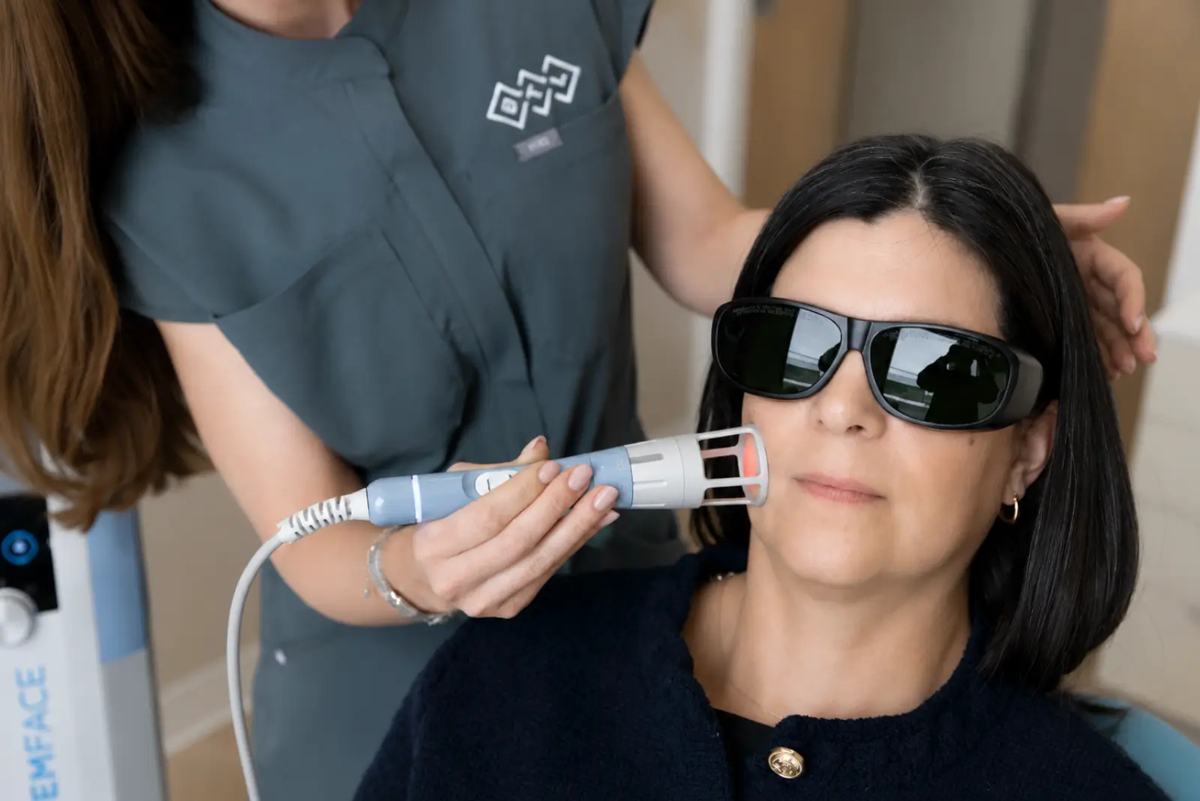
- Treatment consists of 4 sessions of approximately 20 minutes each. There is no downtime, no needles, and no discomfort — most patients describe the sensation as a gentle, soothing warmth.
EMFACE® Functional TMJ Treatment
EMFACE® is Health Canada-licensed and FDA-cleared specifically for the treatment of TMJ dysfunction and associated jaw pain. Using a combination of synchronized radiofrequency (RF) and HIFES® muscle stimulation, EMFACE® directly targets the jaw’s elevator and closing muscles – relaxing tension, easing pain, and restoring healthy range of motion.
Unlike most jaw treatments that only address the joint or tooth surface, EMFACE® works at the muscle level – treating the root cause of the tension and dysfunction. Sessions are 20 minutes, fully hands-free, and require no downtime. Like EMVITAL®, EMFACE® TMJ treatment is delivered on the medical side of the clinic under Dr. Sabah’s direction.
EMFACE® and EMVITAL® complement each other exceptionally well for TMJ patients
- EMVITAL® addresses deep tissue inflammation, circulation, and pain relief at the joint level
- EMFACE® targets the jaw muscles directly, reducing tension and improving function
- For patients with moderate to severe TMJ dysfunction, combining both treatments often produces a comprehensive and lasting results.
EXOMIND™ for Stress-Driven Jaw Pain
Some jaw pain is mechanical. Some is a stressed nervous system showing up in the masseter – clenching and grinding that flare with stress, anxiety or poor sleep. For those patients, Dr. Sabah Jarullah, our on-site family physician, may recommend a course of EXOMIND™ transcranial magnetic stimulation (TMS) alongside the dental plan – appliance, Solea, EMFACE® or EMVITAL® – so the driver is treated as well as the joint.
EXOMIND™ for stress-driven bruxism and TMJ pain is an emerging application supported by the underlying mechanism and by ongoing research; it is discussed case by case at your assessment, and Dr. Z and Dr. Sabah coordinate the combined plan.
Therapeutic Injections for Jaw Pain & Bruxism
Therapeutic jaw-muscle injections – a prescription treatment, different from cosmetic injectables – involve precise, low-dose injections into the masseter muscle (the large chewing muscle on either side of your jaw). When the masseter is overactive from clenching or grinding, it can drive significant jaw pain, headaches, and tooth wear.
More about TMJ & Jaw Pain Treatment
By temporarily relaxing the masseter with these injections, we reduce the force of grinding and clenching, giving the joint and surrounding tissue a chance to recover. Results typically last 3–6 months, and many patients notice improvement within 1–2 weeks of their first treatment.
The treatment also has a secondary aesthetic benefit: over time, it can gently slim the lower face by reducing the bulk of an overworked masseter – a popular outcome for patients seeking both relief and a more refined facial contour.
Custom Mouth Guards
For patients who grind or clench their teeth – particularly at night – a custom-fitted mouth guard is one of the most important tools in protecting the jaw joint and tooth surfaces from further damage.
Unlike over-the-counter guards from the pharmacy, our custom mouth guards are precision-fabricated using digital scans of your teeth. They fit accurately, feel comfortable, and distribute force evenly to reduce joint strain. For many patients, a custom guard is an essential complement to their other TMJ treatments.
Myofunctional Therapy
Myofunctional therapy addresses the way the tongue, lips, and facial muscles function – patterns that, when disrupted, can contribute to jaw dysfunction, sleep-disordered breathing, and postural strain on the jaw joint. Through a series of guided exercises, myofunctional therapy helps retrain these muscle patterns to reduce strain on the TMJ over time.
This is particularly valuable for patients whose TMJ dysfunction is connected to mouth breathing, tongue positioning, or swallowing patterns. Your provider will assess whether myofunctional therapy is a relevant part of your treatment plan.
Your TMJ Assessment at Westside
Every TMJ patient at Westside begins with a thorough assessment so we can understand the full picture — not just your pain, but its likely source and the treatments most likely to resolve it.
Your assessment includes
Step 1 — Full history We listen carefully. You’ll share when the symptoms started, what makes them better or worse, your stress levels, sleeping habits, and any previous treatments. This context shapes everything.
Step 2 — Physical examination Your provider assesses jaw range of motion, joint sounds, and muscle tenderness around the jaw, temples, and neck. We also evaluate your bite and tooth wear patterns for signs of clenching or grinding.
The TMJ–Whole Body Connection
TMJ dysfunction rarely exists in isolation. At Westside, we treat it as part of a larger picture of your health and wellbeing – because the jaw is connected to everything.
TMJ and sleep, TMJ and mental wellness, and TMJ and posture
TMJ and sleep: Clenching and grinding disrupt sleep quality and are often associated with sleep-disordered breathing and sleep apnea. If you’re waking up with jaw pain or headaches, we may recommend a sleep assessment as part of your overall care.
TMJ and mental wellness: Chronic pain — including jaw pain – has a well-documented impact on mood, anxiety, and quality of life. Our EXOMIND™ brain stimulation treatment is available for patients whose mental wellness has been affected by chronic pain or stress.
- No serious adverse events
- FDA-cleared and Health Canada-licensed for TMJ dysfunction
- Targets jaw elevator muscles directly via HIFES stimulation
- Significant improvements in jaw pain, jaw relaxation, and range of motion at 1 and 3-month follow-up
- No downtime, no needles, no anesthesia
- Data on file. Individual results may vary.
Frequently Asked Questions About TMJ Treatment
How do I know if I have TMJ dysfunction?
The most common signs are jaw pain or soreness, clicking or popping sounds when you open and close your mouth, headaches (especially in the morning), and teeth grinding. If you have two or more of these symptoms regularly, a TMJ assessment is worthwhile. Book a consultation and we’ll give you a clear picture.
Do I need a referral to see you for TMJ?
No. You can book a TMJ assessment directly with us. We’ll let you know if we feel a specialist referral would benefit your care.
Is TMJ treatment painful?
None of our primary TMJ treatments – EMVITAL®, EMFACE®, or mouth guards – involve pain. Therapeutic jaw-muscle injections are small injections that most patients describe as a mild pinch. Your comfort is always our priority.
How long does it take to feel better?
This depends on the severity of your condition and the treatments involved. Many patients report noticeable relief within 2–3 EMVITAL® or EMFACE® sessions. For chronic or complex cases, a longer treatment course produces more lasting results.
Can I combine multiple TMJ treatments?
Yes – and in many cases, combining treatments produces the best outcome. For example, EMVITAL® and EMFACE® together address both the joint/tissue level and the muscle level simultaneously. Your provider will recommend an effective combination for your specific case.
Is 0% financing available for TMJ treatment?
Yes. All TMJ treatments at Westside can be financed through Beautifi at 0% interest – we cover the interest on your behalf. Soft credit check only, no impact to your score. Ask our team at your next visit.
Will my insurance cover TMJ treatment?
Coverage for TMJ varies by plan. Some treatments – such as custom mouth guards and dental assessments — are commonly covered. Others may not be. Our team can help you understand your coverage and provide documentation for your claim.
Is TMJ connected to my teeth?
Yes. Bruxism (grinding and clenching) is both a cause and consequence of TMJ dysfunction, and it can cause significant tooth wear, cracking, and sensitivity over time. A custom mouth guard protects your teeth while you address the underlying joint and muscle issues.
Related Services
Content reviewed by Dr. Zubaida Hussain, dentist, and Dr. Sabah Jarullah, family physician, at Westside, West Springs, Calgary SW — last reviewed September 2026. Educational information only; it does not replace an assessment with your provider.
Contact us
Your Calgary SW Dentist Is Here for You
Looking for a trusted southwest Calgary dentist? Whether you're booking your first visit, asking a question, or referring a friend, we'd love to hear from you. Share your details below and our West Springs area team will get back to you with care and clarity.
We look forward to helping you smile with confidence.
Book online